Phuket Beaches 2026: Which One Fits Your Trip (and How to Avoid Crowds)
From Patong's party strip to the empty sands of Mai Khao, every Phuket beach has its own personality. Here's how to pick yours - and when the sea is actually safe to swim.
On this page▾
Disclosure: this guide contains affiliate links. If you book a tour through them, ThaiTodo may earn a small commission at no extra cost to you. We only link products that match the trips described here.
You've booked Phuket, opened a map, and found thirty-plus beaches all described as "paradise" — with no way to tell which one actually matches the trip you have in mind.
Pick wrong and it costs you the holiday: party noise at 2 am when you wanted calm, an hour of taxis a day because your quiet beach is far from everything, or worse — swimming past a red flag in monsoon surf that claims lives on this coast every year.
In this guide, you'll learn which Phuket beach fits your travel style, when the sea is genuinely safe to swim, and the timing tricks that let you enjoy even the famous beaches without the crowds.
Phuket beaches at a glance: match the beach to your trip
Phuket's beaches have wildly different personalities, so the fastest way to choose is by what you want from the trip. Here's the shortlist this guide unpacks, based on beach profiles verified in 2026:
- Nightlife and full tourist energy → Patong. Everything within walking distance, and the busiest sand on the island.
- Best all-rounder → Kata (Kata Yai and Kata Noi). Soft sand, decent swimming, restaurants without the chaos.
- Families and long walks → Karon. Roughly three kilometres of wide golden sand that rarely feels full.
- Upscale resorts and space → Bang Tao. A six-kilometre strip with luxury resorts and surprisingly few people on the sand.
- Sunsets and a local feel → Nai Harn, in the far south near Promthep Cape.
- Escape everyone → the northern beaches: Nai Thon, Nai Yang, Banana Beach and the eleven-kilometre, near-empty Mai Khao.
- A "hidden cove" day → Freedom Beach, reachable only by longtail boat or a jungle trail.
The west coast classics: Patong, Kata and Karon
Patong is the beach you choose deliberately or avoid deliberately — there is no in-between. It's the island's entertainment capital: bars, clubs, malls and street food a few steps from the sand, with crowds rated 9/10 by local beach guides. If you want to walk home from the nightlife, stay here. If you came for quiet mornings, don't.
Kata, fifteen minutes south, is the balanced pick most first-timers are actually looking for. The bay is split into Kata Yai and the smaller, prettier Kata Noi, with softer surf than its neighbours for much of the year and a town that's lively without being loud.
Karon, between the two, plays a different card: sheer space. The beach runs about three kilometres and is so wide that even in the January peak you can find a stretch to yourself. One caution that matters: in the rainy season, Karon records more rip currents than any other beach on the island — local safety guides count up to 18 rip channels in a single season here and at the south end of Kata Yai. Respect the flags (more on that below).
The quiet north: Bang Tao, Surin and the empty beaches
The further north you go on Phuket's west coast, the more sand you get to yourself. Bang Tao's six kilometres front the Laguna resort complex, so facilities are excellent yet the beach itself stays uncrowded outside the hotel sunbed zones. Surin, just south, is the upmarket village option with good beachfront restaurants.
Past the airport turn-off, the island changes character completely:
- Nai Thon and Nai Yang — small, low-rise, and the closest thing left to old Phuket. Casuarina trees instead of beach clubs.
- Banana Beach — a genuinely secluded cove between Nai Thon and Nai Yang, best visited in the morning before day-trippers arrive.
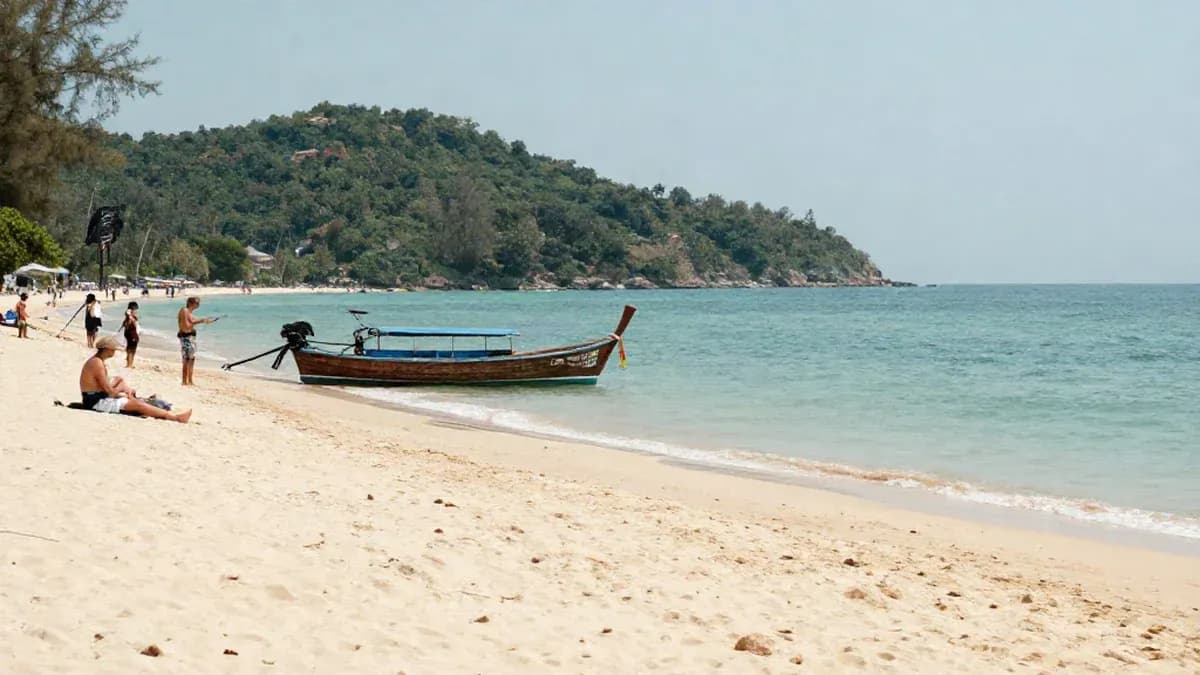
- Mai Khao — eleven kilometres of sand inside Sirinat National Park with almost nobody on it. Sea turtles still nest here between November and February, which tells you how undisturbed it is.
The trade-off is honest: fewer restaurants, longer taxi rides, and in monsoon season these exposed northern beaches get serious surf. That's the price of solitude.
Want a day on water that's actually organised? A catamaran day trip to the Phi Phi Islands covers the famous limestone bays, snorkelling stops and lunch in one run from Phuket — check the Phi Phi Islands speed catamaran day tour on Klook for current times and prices.
The south: Nai Harn and Freedom Beach
Nai Harn is the island's sunset beach. It sits in the far south, more than forty minutes from Patong — which is exactly why it keeps a local, lived-in feel that the central beaches lost years ago. The classic move: swim in the late afternoon, then walk or ride ten minutes up to Promthep Cape for Phuket's most famous sunset viewpoint. Arrive about thirty minutes before sundown to get a spot.
Freedom Beach is the "secret" cove everyone photographs, and it stays quiet because getting there takes commitment. Two options, verified in 2026 guides:
- Longtail boat from Patong — about ten minutes on the water, typically 1,500–2,000 baht return for the boat.
- The jungle trail — a steep 15–20 minute hike down from the car park; slippery after rain, so wear proper shoes, not flip-flops.
There's only one small (pricey) restaurant, so bring water, snacks and a dry bag. That minor hassle is the whole reason the powder-white sand still looks the way it does.
When to swim: high season, monsoon and the red flags
This is the section that matters more than any beach ranking: Phuket's west coast has two different seas depending on the month.
- November to April (high season): the Andaman is generally calm, and swimming conditions are at their best across the west coast. This is also peak crowd season — December and January especially.
- May to October (monsoon / green season): the same beaches face open swell, and strong rip currents form regularly, above all at Karon and southern Kata Yai. Local safety guides report that 20–30 tourists drown in a typical year around Phuket, most of them during these months.
The lifeguard flag system is simple and non-negotiable: green = safe, yellow = caution, red = do not enter the water. People still test it — on 11 July 2026, two British tourists had to be rescued at Nai Thon after entering the water despite red-flag warnings. The sea in monsoon Phuket does not care how well you swim.
If you're travelling between May and October, plan around it: swim in the morning when conditions are often gentler, stick to beaches with lifeguard posts, and treat any red flag as a closed door.
Rainy season plan B: point your boat east
When the west coast is rough, the smart move isn't to skip the water — it's to change coasts. The islands off Phuket's south and east — Coral Island (Koh Hey) and Racha — sit in more sheltered water and stay swimmable and snorkelable on many days when the west-coast beaches are flying red flags. Coral Island is a short speedboat hop from Phuket's south coast, and its calm, shallow snorkelling spots suit beginners and kids. The Racha and Coral Islands speedboat day tour on Klook bundles both islands with lunch and snorkelling gear.
One honest 2026 note for island planners: Maya Bay, the famous cove on Phi Phi Leh, is closed to visitors from 1 August to 30 September 2026 for its annual marine rehabilitation programme. Phi Phi tours still run and boats pass the bay for photos, but nobody lands on the beach itself during those two months. If standing on Maya Bay's sand is your dream shot, book for October onwards.
The mistakes that catch first-timers
We've watched the same errors repeat on Phuket beaches, so skip them:
- Ignoring red flags because the sea "looks fine". Rip currents don't look like anything from the sand. This is the mistake that kills, and it's entirely avoidable.
- Booking Patong "because it's central" when you wanted calm. It's central to nightlife, not to peace. Kata or Bang Tao serve most travellers better.
- Underestimating distances. Phuket is Thailand's largest island; Nai Harn to Mai Khao is well over an hour by car. Pick a base near the beaches you'll actually use.
- Visiting famous beaches at midday. The same sand that's packed at 1 pm is nearly empty at 8 am — and the light is better for photos.
- Assuming every beach has facilities. North of Bang Tao, bring cash, water and sunscreen; there may be one vendor or none.
So which Phuket beach is yours?
Party and convenience: Patong. Balance: Kata. Family space: Karon. Resort comfort: Bang Tao. Sunsets and locals: Nai Harn. True quiet: Nai Thon, Nai Yang or Mai Khao — and Freedom Beach for the one-day adventure. Come November–April for easy swimming, or come in green season for empty sand and pool-and-boat days, with the east-coast islands as your swimming backup. And if you want one organised day out on the Andaman, the Phi Phi catamaran day tour is the easy way to see the postcard scenery without planning logistics yourself.
Planning more than Phuket? Explore our Thailand guides on ThaiTodo.
Sources
- Phuket Beaches: Every Beach Ranked & Compared — IN Phuket (travelinphuket.com/guides/phuket-beaches), updated March 2026
- Best Beaches In Phuket 2026: 45 Beaches From Beach Resorts To Hideaways — Phuket 101 (phuket101.net/beaches-phuket/), consulted 12 August 2026
- Phuket Rip Currents & Beach Safety Guide — Phuket Expat Guide (phuketexpatguide.com/blog/phuket-rip-currents-beaches/), consulted 12 August 2026
- Two British tourists rescued after entering red-flag waters at Phuket beach — Khaosod English, 11 July 2026 (khaosodenglish.com)
- Maya Bay Closure August–September 2026 — 5 Star Marine Phuket, 6 January 2026 (5starmarinephuket.com)
- Maya Bay Closes August 1, 2026 — Final Weeks Before the Seasonal Break — T-Island Travel (tisland.travel), consulted 12 August 2026
Good to know
Frequently asked questions
Which Phuket beach is best for first-timers?
Kata is the safest all-round pick: soft sand, a lively but not overwhelming town, and gentler surf than its neighbours for much of the year. Choose Patong only if nightlife is the priority, Karon for space with families, and Bang Tao if you want a quiet resort setting.
Can you swim in Phuket during the rainy season (May to October)?
Sometimes, but only with care. The west coast faces open swell in monsoon season and strong rip currents form regularly, especially at Karon and southern Kata Yai. Follow the lifeguard flags strictly - red means do not enter the water - and consider day trips to the more sheltered islands off the south and east coasts instead.
Is Maya Bay open in 2026?
Not in late summer. Maya Bay on Phi Phi Leh is closed to visitors from 1 August to 30 September 2026 for its annual marine rehabilitation programme. Phi Phi boat tours still run and pass the bay for photos, but nobody can land on the beach during those two months. It is scheduled to reopen on 1 October 2026.
How do you get to Freedom Beach?
There are two ways: a longtail boat from Patong (about ten minutes on the water, typically 1,500-2,000 baht return) or a steep 15-20 minute jungle trail from the car park above the beach. The trail gets slippery after rain, so wear proper shoes. Facilities are minimal - bring water, snacks and a dry bag.
About the author
ThaiTodo Editorial
Editorial team — Thailand travel guides
The ThaiTodo editorial team researches tours, activities and local experiences across Thailand. We publish practical, honest guides to help travelers plan Bangkok, Phuket, Chiang Mai and beyond — with clear tips and transparent affiliate disclosures when we recommend bookings.
Keep reading